
About
Plantar fasciitis ranks among the leading causes of heel pain affecting adults today. The condition develops when the plantar fascia, a strong band of connective tissue running along the sole of the foot, becomes strained, irritated, or inflamed over time. Without proper care and treatment, plantar fasciitis can interfere with everyday movement and overall well-being.
Symptoms Addressed Through Plantar Fasciitis Therapy
- Sharp, stabbing heel pain (often worse first thing in the morning)
- Aching or soreness following prolonged periods of standing or walking
- Tenderness or swelling along the bottom of the foot
- Worsening discomfort following physical activity or exercise
Causes And Risk Factors
- Repeated stress and strain placed on the plantar fascia over time
- High-impact activities such as running or jumping
- Spending long hours standing or walking on hard surfaces
- Wearing unsupportive or worn-out footwear
- Biomechanical factors such as flat feet, high arches, or irregular gait
- Lifestyle factors, including excess body weight or sudden increases in activity level
What Is Plantar Fasciitis Embolization (PFE)?
Plantar Fasciitis Embolization (PFE) is a minimally invasive outpatient procedure offered at the Vascular and Vein Center. This innovative approach requires no general anesthesia and carries a strong success rate, working to reduce pain and improve overall quality of life. PFE is a practical option for patients looking to find lasting relief without the need for traditional surgery.
The process involves a few straightforward steps:
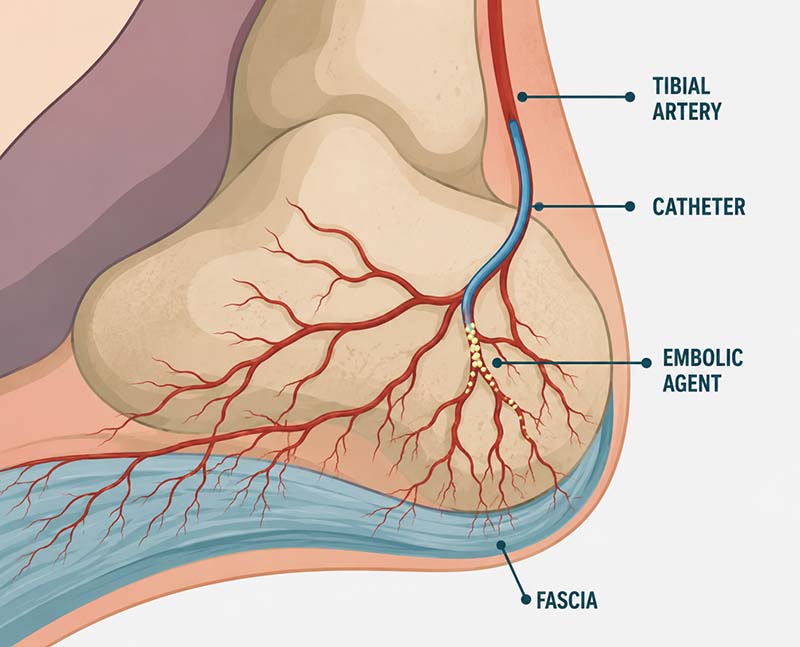
- A specialist uses advanced imaging to carefully guide a catheter into the blood vessels of the foot
- The catheter is directed toward the arteries responsible for supplying blood to the plantar fascia
- An embolic agent is introduced to reduce blood flow to the inflamed tissue, helping to calm pain and promote healing
Why Conventional Treatments Aren’t Always Enough
For most people, treatment begins with non-surgical options like:
- Stretching and physical therapy
- Orthotic shoe inserts
- Ice therapy
- Steroid injections
While these can help, they often provide only temporary relief. Injections wear off, and surgery – while effective for some – comes with a lengthy recovery and the risk of complications.
Benefits of PFE Compared To Surgery or Injections
Patients often choose PFE because it offers:
- No large incisions
- Quick recovery and minimal downtime
- Outpatient treatment in a comfortable setting
- Evidence-based results for reducing chronic heel pain
- A solution for patients who haven’t improved with other treatments
In recent studies, PFE patients reported significant pain reduction within months, with continued improvement over the first year.
Is PFE Right For You?
You may be a good candidate for PFE if you:
- Have had heel pain for 6 months or more
- Have tried stretches, orthotics, or injections without lasting relief
- Want a non-surgical option with a shorter recovery time
Schedule a consultation today to find out if PFE is the right solution for you.